

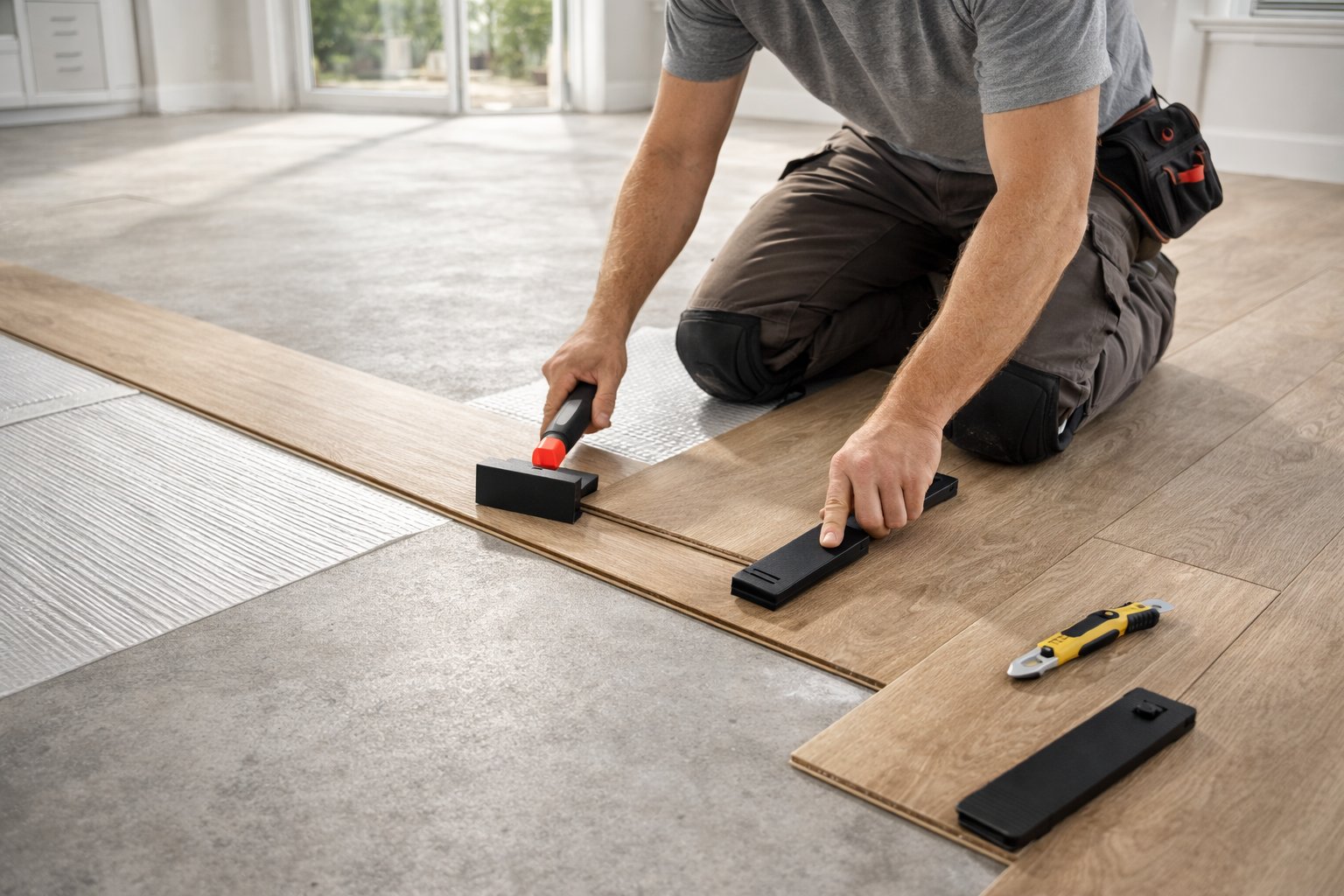
Concrete slabs are common across many homes in Crystal Lake and the surrounding Northwest Chicago suburbs—especially in basements, lower levels, condos, and slab-on-grade construction. Luxury vinyl flooring has become a popular solution for these spaces thanks to its durability, moisture resistance, and realistic wood and stone visuals.
Installing luxury vinyl flooring over concrete, however, is not as simple as clicking planks together and calling it done. The long-term performance of the floor depends heavily on proper preparation, moisture control, and correct installation methods. Skipping steps often leads to problems such as plank separation, bubbling, or premature wear.
Why concrete slabs require special attention
Concrete may look solid and dry, but it is porous by nature. Moisture vapor can travel upward through the slab long after construction is complete. Even homes built decades ago can experience seasonal moisture fluctuations that affect flooring materials.
Luxury vinyl products are more forgiving than hardwood, but they are not immune to moisture-related issues. Without proper preparation, trapped moisture can cause adhesive failure, mold beneath the floor, or planks that shift and curl over time. Understanding this behavior is the foundation of a successful installation.
Evaluating the condition of the concrete
Before any luxury vinyl flooring is selected or installed, the concrete slab must be evaluated. This step is often overlooked but plays a major role in long-term results.
Key checks include:
Moisture testing to confirm vapor levels fall within manufacturer guidelines
Surface flatness, ensuring the slab meets tolerance requirements (usually within 3/16" over 10 feet)
Structural integrity, checking for cracks, spalling, or weak areas
Cleanliness, removing dust, oils, old adhesives, or paint residue
Concrete does not need to be perfectly smooth, but it must be flat and stable. High spots are typically ground down, while low areas are filled with a cement-based leveling compound.
Moisture control and vapor protection
Moisture mitigation is one of the most critical steps when installing luxury vinyl over concrete. Depending on the product type and slab conditions, protection may include:
Built-in underlayment with vapor barrier properties
Separate moisture barrier film installed beneath floating floors
Moisture-resistant adhesives for glue-down applications
Full moisture mitigation systems for higher vapor readings
Manufacturers publish specific moisture limits, and exceeding those limits can void warranties. Professional testing and proper product selection help avoid costly failures down the line.
Choosing the right luxury vinyl construction
Not all luxury vinyl flooring performs the same over concrete. Construction type matters.
Rigid core (SPC or WPC) products provide added stability and help bridge minor slab imperfections.
Floating click-lock systems allow natural expansion and contraction without being bonded to the slab.
Glue-down luxury vinyl planks or tiles work well in commercial or high-traffic spaces but demand stricter moisture control.
Thicker wear layers, denser cores, and quality locking systems tend to perform better on concrete substrates, especially in basements or multi-level homes.
Acclimation and layout planning
Luxury vinyl flooring should always acclimate to the home environment before installation. Planks are typically stored in the installation space for at least 24–48 hours, allowing temperature and humidity to stabilize.
Layout planning happens during this stage as well. Professional installers determine plank direction, expansion gaps, transition placements, and seam staggering to create a balanced, natural-looking result. This planning also accounts for doorways, cabinetry, and fixed objects that affect expansion requirements.
Proper installation techniques that protect performance
Correct installation methods vary by product, but several best practices apply across the board.
Expansion gaps are maintained around walls and vertical surfaces.
Planks are installed over a flat, dry substrate with no soft spots.
Locking systems are engaged fully without forcing connections.
Rows are staggered according to manufacturer recommendations.
Transitions are used where floor heights or materials change
Rushing this stage or ignoring product-specific instructions often leads to visible issues within months of installation.
Common mistakes that cause premature failure
Luxury vinyl flooring problems over concrete almost always trace back to installation shortcuts. The most frequent issues include:
Skipping moisture testing
Installing over uneven slabs without leveling
Using the wrong underlayment or adhesive
Failing to leave adequate expansion space
Installing immediately after concrete repairs without proper curing
Avoiding these mistakes protects both the flooring investment and the home itself.
Long-term benefits when installed correctly
When installed properly, luxury vinyl flooring over concrete offers impressive benefits. Floors remain stable through seasonal changes, resist moisture-related damage, and provide a comfortable, attractive surface for everyday living. Maintenance stays simple, and performance remains consistent for many years.
Professional installation ensures the flooring not only looks great on day one but continues to perform as intended long after furniture is moved in and daily life takes over.
Flooring support from a local team that understands concrete slabs
Area Flooring & Tile is a family-run flooring company based in Crystal Lake, Illinois, serving nearby communities with shop-at-home convenience. Our flooring experts specialize in luxury vinyl installations over concrete slabs, handling moisture testing, surface preparation, and professional installation from start to finish. For dependable guidance and long-lasting results, reach out to Area Flooring & Tile to schedule a personalized in-home consultation today.


